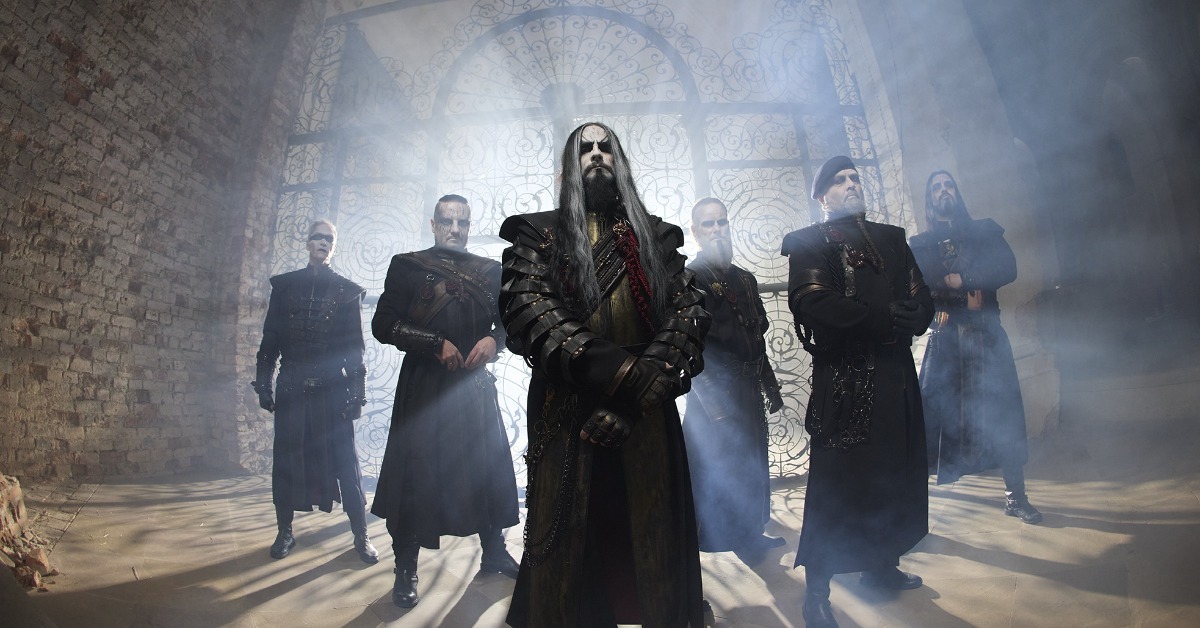
Aug 14 Fri
Jam Presents
Dimmu Borgir
with Hulder
Grand Serpent Rising Tour US 2026
Doors: 6:30 PM / Show: 7:30 PM
All Ages
The VIC Theatre
All Ages
Aug 14, 2026
-
DateAug 14, 2026
-
Event Starts7:30 PM
-
Doors Open6:30 PM
-
On SaleOn Sale Now
-
AgesAll Ages
Grand Serpent Rising
Waiting for something you truly desire can be pure agony and loyal fans of Norwegian extreme metal royalty Dimmu Borgir know that feeling better than most. Ever since guitarist Sven “Silenoz” Kopperud and vocalist Stian “Shagrath” Thoresen formed the band amid Norway’s shadowed forestlands in 1993-at the height of second-wave black metal’s triumphant aeons-rushing the creative process has never been part of the equation. Especially since Abrahadabra (2010), Dimmu Borgir’s latter-day opuses have arrived only when every last detail has been carved into place, never when trends, algorithms, or schedules demanded it. It has proven to be the right path for these northern devotees of the underworld: Dimmu Borgir’s records have gone on to become all-time metal classics.
“No question: quality must always trump quantity,” Silenoz states with calm certainty. “We eventually set deadlines, but in the early stages of a new album, there are no schedules at all. Rushing means nothing to us. The most powerful blackened art simply can’t be forced without losing its essence."
The guitarist pauses, then continues: “It can easily become an endless process. Whatever you create, you constantly feel it could be improved - that’s the artist’s curse, and that’s why you eventually move on to make another album. But with every record, a point finally comes when everything feels exactly right. And that’s when it’s time to let it go.”
Eight years after their previous studio release Eonian, Dimmu Borgir return with thirteen punishing yet remarkably diverse tracks under the banner Grand Serpent Rising and even the sheer weight of the album title alone speaks volumes.
”It fits perfectly,” Silenoz nods. ”Dimmu Borgir is a leviathan of a band on a grand scale and we are rising once again. While the serpent represents evil to some, for us it symbolizes something else: renewal, growth, knowledge, and liberation. Shedding our skin, so to speak. And let’s not forget that February 2026 marks the end of the Year of the Snake, roughly the same moment this album was completed.”
True to Dimmu Borgir tradition, the creative process was once again grinding and demanding. Already during 2018–2019, and throughout the pandemic years, riffs, melodies and thematic ideas were developed independently in home studios, slowly accumulating in to something vast.
“When we finally reunited fully as a band,” Silenoz explains, “we realised we had far more strong material than we ever expected, enough for a double album.”
A positive problem, some might say - if a problem at all.
“Coming up with ideas has never been difficult for us,” the guitarist laughs. “The real challenge is killing your darlings. Sometimes you deeply love a certain riff or melody, but that alone doesn’t make a song. We had to set our personal attachments aside and focus entirely on what was best for the band and the album. Every single flavor, twist, and element had to earn its place. The result is a distilled, focused statement - no excess, no filler.”
Once you descend into the treacherous journey charted by this Norwegian serpent, Silenoz’s words are immediately vindicated. Following the ominous intro ‘Tridentium,’ the opening track ‘Ascent’ strikes like lightning across a frozen, darkened northern sky. Aggressive, vicious, and twistedly beautiful, it instantly confirms that Dimmu Borgir have lost none of their intensity, menace, or authenticity.
And the momentum never falters. Across nearly an hour of music, Grand Serpent Rising maintains an iron grip: it is a majestic and powerful statement that sounds like a band possessed by the feral energy of the early ’90s Norwegian black metal underground , while simultaneously wielding the compositional discipline and hard - earned wisdom forged through more than three decades of relentless creation.
“One of the biggest differences compared to Eonian,” Silenoz notes, “is that we scaled back the choirs and orchestration a little. Those elements are essential to Dimmu Borgir, of course, but this time they appear only where they truly add power. And when they hit, you really feel it.”
Another significant shift within Dimmu Borgir’s ominous universe occurred in 2024, when longtime guitarist Galder departed to focus on his own band, Old Man’s Child. Rather than weakening the collective, the change pulled the creative process closer to its roots.
“Fewer people in the kitchen means less compromise,” Silenoz notes. “In the early days of Dimmu Borgir, it was just me and Shagrath bouncing ideas off each other. In many ways, we’ve returned to that, it’s very direct and productive. We tell each other straight away if an idea isn’t strong enough.”
Despite this, Grand Serpent Rising remains a full-band effort, with Daray (drums), Victor Brandt (bass), Gerlioz (keyboards), and Damage (guitars) all playing vital roles. “Although most core ideas still originate from me or Shagrath,” Silenoz underlines, “they flow freely between all members. Everyone brings their own ideas to the table to make the songs stronger, and that dynamic works exceptionally well these days.”
Lyrically, the album follows a clear spiritual trajectory without becoming a rigid concept record. Themes of transformation, ego dissolution, and awakening resonate throughout, drawing on esoteric traditions and alchemical self - transformation , the act of shedding the old self in pursuit of one's true potential.
“Within every human being lie dormant divine centres, the chakras, whose awakening may take countless lifetimes through natural evolution,” Silenoz explains. “Yet once the soul reaches sufficient maturity, this process can be accelerated. Through disciplined self-training and deep meditation, the sacred force may rise within a single lifetime, activating each centre in turn.”
Renowned for his layered and immersive storytelling, the guitarist continues: “This ascending current, known since antiquity as Kundalini or the Serpent Fire, transforms the seeker, awakening godlike qualities and fulfilling the ancient promise: ‘Ye shall be as gods.’ As we pass temporarily through this world, we shed our skin like the serpent, again and again, striving to transcend our limitations and become something greater.”
In a nod to the band’s early years, a couple of new tracks also appear in Norwegian. “These songs could have been in English,” Silenoz explains, “but our native language felt more appropriate for certain subjects. For example, ‘Ulvgjeld & Blodsodel’, the album’s leading single, deals with heritage and bloodline, passing something essential on to those who come after you.”
“Choosing the singles this time?” he laughs. “I honestly didn’t know where to start, every song felt like it could be a leading track!”
Recording once again took place in Gothenburg with trusted producer Fredrik Nordström, the consummate professional behind such Dimmu Borgir classics as Puritanical Euphoric Misanthropia and Death Cult Armageddon.
“He knows us and the sound we’re after,” Silenoz says. “We drifted apart for a time while working with other people, but when he remixed Puritanical a few years back, it reminded us just how strong our connection still was. Working with him again felt completely natural and the results couldn't be better.”
From the outset, the sonic goal was crystal clear. “We wanted the album to sound like Dimmu Borgir as a live unit,” Silenoz grins. “What you hear is what was actually played. The sound is organic and powerful, absolutely no hyper-quantized modern metal aesthetics, and no ‘typewriter’ kick drums.”
When mixing and mastering were completed as the final autumn days grew shorter and darker, Nordström delivered a verdict Silenoz won’t soon forget.
“Fredrik told us this was the best Dimmu Borgir album he’s ever worked on,” he recalls. “He didn’t have to say that and he’s a straight shooter. When he says something like that, he genuinely means it.”
Silenoz pauses, then smiles. “I know it’s a massive cliché to say this is our best album,” he admits. “But look at it this way: why would we even bother doing this if we didn’t feel that way ourselves? When both the band and the producer feel the mission has been fully accomplished, whatever comes from the outside; fans, journalists, critics - is secondary. If people love it, great. If there’s criticism, that’s fine too. It doesn’t affect us. We walk our own dark paths regardless.”
Waiting for something you truly desire can be pure agony and loyal fans of Norwegian extreme metal royalty Dimmu Borgir know that feeling better than most. Ever since guitarist Sven “Silenoz” Kopperud and vocalist Stian “Shagrath” Thoresen formed the band amid Norway’s shadowed forestlands in 1993-at the height of second-wave black metal’s triumphant aeons-rushing the creative process has never been part of the equation. Especially since Abrahadabra (2010), Dimmu Borgir’s latter-day opuses have arrived only when every last detail has been carved into place, never when trends, algorithms, or schedules demanded it. It has proven to be the right path for these northern devotees of the underworld: Dimmu Borgir’s records have gone on to become all-time metal classics.
“No question: quality must always trump quantity,” Silenoz states with calm certainty. “We eventually set deadlines, but in the early stages of a new album, there are no schedules at all. Rushing means nothing to us. The most powerful blackened art simply can’t be forced without losing its essence."
The guitarist pauses, then continues: “It can easily become an endless process. Whatever you create, you constantly feel it could be improved - that’s the artist’s curse, and that’s why you eventually move on to make another album. But with every record, a point finally comes when everything feels exactly right. And that’s when it’s time to let it go.”
Eight years after their previous studio release Eonian, Dimmu Borgir return with thirteen punishing yet remarkably diverse tracks under the banner Grand Serpent Rising and even the sheer weight of the album title alone speaks volumes.
”It fits perfectly,” Silenoz nods. ”Dimmu Borgir is a leviathan of a band on a grand scale and we are rising once again. While the serpent represents evil to some, for us it symbolizes something else: renewal, growth, knowledge, and liberation. Shedding our skin, so to speak. And let’s not forget that February 2026 marks the end of the Year of the Snake, roughly the same moment this album was completed.”
True to Dimmu Borgir tradition, the creative process was once again grinding and demanding. Already during 2018–2019, and throughout the pandemic years, riffs, melodies and thematic ideas were developed independently in home studios, slowly accumulating in to something vast.
“When we finally reunited fully as a band,” Silenoz explains, “we realised we had far more strong material than we ever expected, enough for a double album.”
A positive problem, some might say - if a problem at all.
“Coming up with ideas has never been difficult for us,” the guitarist laughs. “The real challenge is killing your darlings. Sometimes you deeply love a certain riff or melody, but that alone doesn’t make a song. We had to set our personal attachments aside and focus entirely on what was best for the band and the album. Every single flavor, twist, and element had to earn its place. The result is a distilled, focused statement - no excess, no filler.”
Once you descend into the treacherous journey charted by this Norwegian serpent, Silenoz’s words are immediately vindicated. Following the ominous intro ‘Tridentium,’ the opening track ‘Ascent’ strikes like lightning across a frozen, darkened northern sky. Aggressive, vicious, and twistedly beautiful, it instantly confirms that Dimmu Borgir have lost none of their intensity, menace, or authenticity.
And the momentum never falters. Across nearly an hour of music, Grand Serpent Rising maintains an iron grip: it is a majestic and powerful statement that sounds like a band possessed by the feral energy of the early ’90s Norwegian black metal underground , while simultaneously wielding the compositional discipline and hard - earned wisdom forged through more than three decades of relentless creation.
“One of the biggest differences compared to Eonian,” Silenoz notes, “is that we scaled back the choirs and orchestration a little. Those elements are essential to Dimmu Borgir, of course, but this time they appear only where they truly add power. And when they hit, you really feel it.”
Another significant shift within Dimmu Borgir’s ominous universe occurred in 2024, when longtime guitarist Galder departed to focus on his own band, Old Man’s Child. Rather than weakening the collective, the change pulled the creative process closer to its roots.
“Fewer people in the kitchen means less compromise,” Silenoz notes. “In the early days of Dimmu Borgir, it was just me and Shagrath bouncing ideas off each other. In many ways, we’ve returned to that, it’s very direct and productive. We tell each other straight away if an idea isn’t strong enough.”
Despite this, Grand Serpent Rising remains a full-band effort, with Daray (drums), Victor Brandt (bass), Gerlioz (keyboards), and Damage (guitars) all playing vital roles. “Although most core ideas still originate from me or Shagrath,” Silenoz underlines, “they flow freely between all members. Everyone brings their own ideas to the table to make the songs stronger, and that dynamic works exceptionally well these days.”
Lyrically, the album follows a clear spiritual trajectory without becoming a rigid concept record. Themes of transformation, ego dissolution, and awakening resonate throughout, drawing on esoteric traditions and alchemical self - transformation , the act of shedding the old self in pursuit of one's true potential.
“Within every human being lie dormant divine centres, the chakras, whose awakening may take countless lifetimes through natural evolution,” Silenoz explains. “Yet once the soul reaches sufficient maturity, this process can be accelerated. Through disciplined self-training and deep meditation, the sacred force may rise within a single lifetime, activating each centre in turn.”
Renowned for his layered and immersive storytelling, the guitarist continues: “This ascending current, known since antiquity as Kundalini or the Serpent Fire, transforms the seeker, awakening godlike qualities and fulfilling the ancient promise: ‘Ye shall be as gods.’ As we pass temporarily through this world, we shed our skin like the serpent, again and again, striving to transcend our limitations and become something greater.”
In a nod to the band’s early years, a couple of new tracks also appear in Norwegian. “These songs could have been in English,” Silenoz explains, “but our native language felt more appropriate for certain subjects. For example, ‘Ulvgjeld & Blodsodel’, the album’s leading single, deals with heritage and bloodline, passing something essential on to those who come after you.”
“Choosing the singles this time?” he laughs. “I honestly didn’t know where to start, every song felt like it could be a leading track!”
Recording once again took place in Gothenburg with trusted producer Fredrik Nordström, the consummate professional behind such Dimmu Borgir classics as Puritanical Euphoric Misanthropia and Death Cult Armageddon.
“He knows us and the sound we’re after,” Silenoz says. “We drifted apart for a time while working with other people, but when he remixed Puritanical a few years back, it reminded us just how strong our connection still was. Working with him again felt completely natural and the results couldn't be better.”
From the outset, the sonic goal was crystal clear. “We wanted the album to sound like Dimmu Borgir as a live unit,” Silenoz grins. “What you hear is what was actually played. The sound is organic and powerful, absolutely no hyper-quantized modern metal aesthetics, and no ‘typewriter’ kick drums.”
When mixing and mastering were completed as the final autumn days grew shorter and darker, Nordström delivered a verdict Silenoz won’t soon forget.
“Fredrik told us this was the best Dimmu Borgir album he’s ever worked on,” he recalls. “He didn’t have to say that and he’s a straight shooter. When he says something like that, he genuinely means it.”
Silenoz pauses, then smiles. “I know it’s a massive cliché to say this is our best album,” he admits. “But look at it this way: why would we even bother doing this if we didn’t feel that way ourselves? When both the band and the producer feel the mission has been fully accomplished, whatever comes from the outside; fans, journalists, critics - is secondary. If people love it, great. If there’s criticism, that’s fine too. It doesn’t affect us. We walk our own dark paths regardless.”