Mar 13 Sat
Jam Presents
Wasia Project - Nocturne Live 2027
Doors: 6:30 PM / Show: 7:30 PM
All Ages
The VIC Theatre
All Ages
Mar 13, 2027
-
DateMar 13, 2027
-
Event Starts7:30 PM
-
Doors Open6:30 PM
-
On SaleOn Sale Now
-
AgesAll Ages
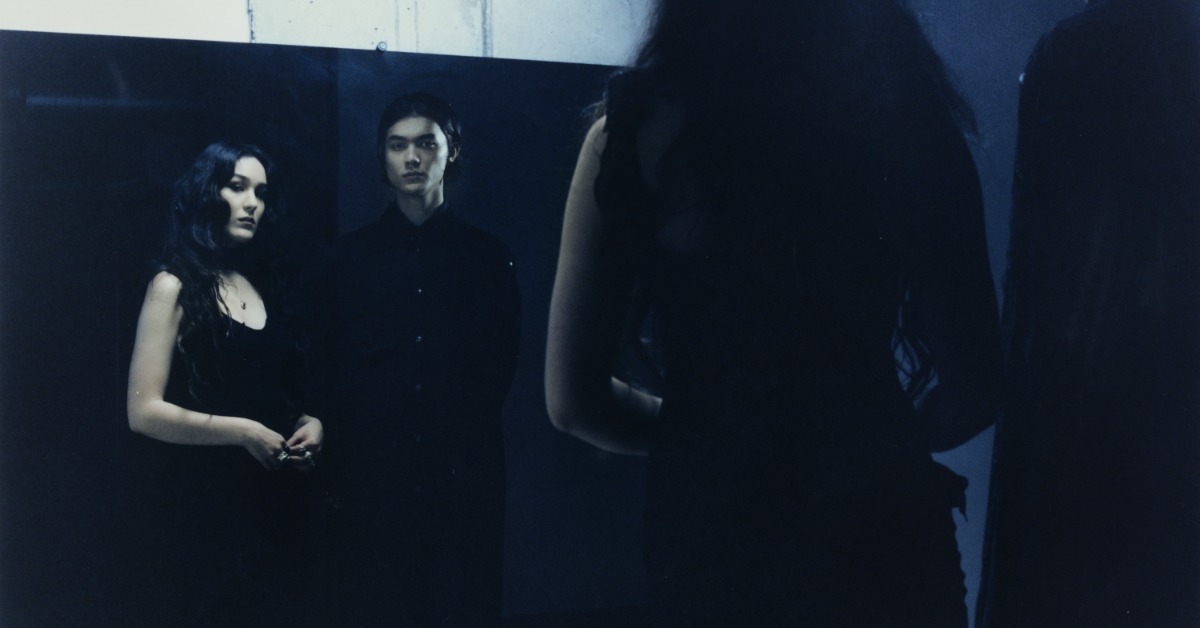
Wasia Project chart a new hinterland on debut album, ‘Nocturne’, out this summer via AWAL. Sibling duo - Olivia Hardy and Will Gao - turn coming-of-age angst into catharsis, fashioning a kinetic journey steeped in the lore of the night; the heady introspection of twilight hours, and the euphoric embrace of the dancefloor where bodies commune and coexist. Across 12 tracks, Wasia Project alchemize their classical training with the friction and frisson of club-adjacent dance music, cinematic piano-pop balladry, modern soul and shades of electronica. If one stock image of the auditory journey is evoked, it’s that of a white lily blooming in a moonlit urban space surrounded by silhouettes captured through slow shutter speed.
‘Nocturne’ is the voice of youth, the voice of now. An album that is intrinsically fresh and relevant, a presentation of Wasia Project’s experiences, both unique and universal, for audiences of all ages to relate to and reflect on. An eerily prescient take on the lost years during and after COVID, the album examines the residual effects of distance and isolation on a perennially-online generation of young adults suspended in time. In keeping with the interior and exterior night-time spaces Will and Olivia were occupying as they entered their twenties, the pair lower the pH of their sound, eschewing the lightness of their early inventions for a darker, grittier, more narcotic brew.
Wasia Project’s dedicated and dialled in audience snowballed upon the release of EP ‘how can I pretend?’, and a run of dewy-eyed standalone singles released in 2022 and 2023. They gestured at a cooler sonic palette on transitional project ‘Isotope’, released in 2024, and these somnambulant moodscapes would form the base notes to the tactile world of ‘Nocturne’. The album evolved through repeated revisions over the span of a year. The duo had felt assured and in control when making ‘Isotope’, but creatively unmoored when sitting down to sketch out a lengthier project at the top of 2025. The recording became a point of contention: Olivia’s atomized and meticulous approach to songwriting collided with Will’s feeling-first, raw process. “We underestimated how much we needed to let the material incubate and breathe,” Olivia says. “In terms of creative flow, it wasn’t flowing. It all felt very stop-start. There were so many ideas but we needed to pause and really think about how to align, how to move forward with intention and raise the bar for ourselves”
After a festival break, Wasia Project decamped to Baltic Studios in East London and reconfigured their process as individuals and co-creators, moving away from classic, convention-based songwriting. Olivia compelled herself to sit down at the piano and freestyle. These extemporised moments would then be patched together based on feel, with Will furthering ideas and layered productions, and vice versa. “It all started to melt together in a cool, new way,” Olivia continues. "We were shifting and constantly changing the way we do things. We tried from-the-ground-up songwriting; starting with guitar, then the lyrics, building it up and outwards bit by bit.”
Guided by longtime collaborator St Francis Hotel - the Irish-born, London-based producer Declan Gaffney, who has worked with the duo since 2023 signature song ‘Petals On The Moon’ - ‘Nocturne’ brings dual sides of Wasia Project into sharp focus: softness versus abrasiveness, autobiographical detail versus allegory, classical codas versus engineered propulsion, organic versus synthetic brushstrokes.
‘Nocturne’ leans into the duo’s idiosyncrasies and the way they interpret a world cloaked in the shadow of the night. Will was activated by the Berlin club scene and the post-’brat’ epoch; by raw-nerved techno and the sensory, out-of-body experience that comes with experiencing dance music in judgement-free communal spaces. “It felt visceral. It rewired my approach to socialising, and made me embrace spaces that were interactive,” he says. “It can feel like a rat race online, very self-serious and competitive. I switched my ethos from that to encapsulate a feeling or sensation that embraces coming together.”
For Olivia, her search for lucidity occurred in the early hours of the morning within insular spaces; in her bedroom, in nature, or the confines of a church piano room. She grappled with why the clarity in her thoughts and feelings was most pronounced in isolation. “I’m able to do things very fully when I’m alone. It’s when I’m at my most open and spiritual,” she says. “I’m mining through complex emotions but I also feel comfortable. In that moment before dawn I see things very clearly.”
Perhaps no track captures Wasia Project’s interplay of stillness and confrontation, solitude and synergy, than album opener and lead single, ‘2515’. Bridging their cinematic sound with an undulating electronic throb, ‘2515’ is grounded in the atmosphere of both the mind and the dancefloor. The opening “2515, been in your car” refrain - Olivia’s voice wreathed in effects, broadcast as a distant murmur - mirrors the motorised sensation that courses through ‘Nocturne’. “There are some tracks on this album that are pure ice: ‘2515’ is one of them,” Olivia shares. “A lot of the songs on the album are about misunderstandings, under the bracket of connection. Connections don’t feel seamless right now. So, we’re honouring that confused feeling in a sonically grand way.” ‘Bleeding Gold’, the second track on the album, is a paean to the ephemeral nature of recent years, to the relationships gained and lost. The city is the neon-lit backdrop to a song that, while buoyant and upbeat, continues to reveal the disorienting feelings that come with growing up and moving on.
This sonic maximalism permeates tracks like ‘Vogue’, a body-talk anthem that finds Wasia Project at their most immediate and sensory. Bottling both club euphoria and chamber pop flourishes, ‘Vogue’ is laced with an after-hours energy that conjures images of swaying, synchronised bodies in a low-lit room. Darkly elegant and oozing with verve, ‘Vogue’ is a slinky dancefloor caper - a score for those all-pervading late-night feels. Then there’s ‘Strike Me Down From Heaven’, arguably Wasia Project’s most trippy and experimental track to date. Subtlety is traded for cinematic grandeur on a neo-classical, synth-pop hybrid. Olivia’s voice, stretched to a diaphanous falsetto, guides the listener through an existential crisis; sex, life and death dissected and amped up to Biblical proportions. "This is one song that maintained its form from the beginning,” Will says. “It’s a bonkers song with two sides; the softer, introspective side and the clubbier side. We wanted to punch our sound into a new space.”
Even in the quieter, reined-in moments, Wasia Project wanted to temper their sound and move away from the confection hit of their earlier releases. Alongside broader influences like Mitski and Billie Eilish, on ‘Even If I Tried’, Wasia Project tapped into the modern soul minimalism of ’Love Deluxe’-era Sade and Massive Attack-adjacent trip-hop: their once burnished sound frayed, eroded and discoloured. ‘Moon Goddess’, positioned as a palate cleanser, is an electro-acoustic nocturne vacillating between an ascending string symphony and a jazz-tinged sound collage. Inspired by the Chinese legend of the moon goddess, Wasia Project fashioned a melancholic torch song of starcrossed lovers from a mythical, faraway terrain.
It’s one of a few compositions that subtly weave in Wasia Project’s Chinese heritage. These intricacies aren’t born from a conscious desire to employ the pentatonic scale, or create an oriental sound. Instead they originate from a more intuitive, subliminal place. “I’ve noticed in my writing, when I’m evoking sad emotions, I’m subconsciously tapping into the sounds and styles of China. It doesn’t feel manufactured. ‘Moon Goddess’ is a very lonely musical piece, and that melody is so specific to me,” Olivia says.
That sense of cultural dissonance Wasia Project once felt in the diaspora is no longer something to be reckoned with: it’s an intrinsic part of their creative DNA. Their fused heritage is reflected in the silhouettes and skylines of Beijing, Hong Kong, Berlin and London, which form the milieu to this era’s stories and visuals. It's woven into the elevated, draped fashion which echo the nature versus urban living contrast, and in the intersection between wide-eyed youth and the more adult, evolved themes explored in granular detail. “This album honours that our Chinese heritage is inherently a part of us,” Will explains. “But our work is so much more. It’s an ever-rich tapestry of influences and potential. This work feels limitless and boundless.”
On the curtain closer ‘Wildfire’, Wasia Project give themselves permission to say what they can’t. On an album that has ventured into mythic, folkloric, interior and communal worlds, Wasia Project bypass symbolism for a direct expression of pure, unadulterated emotion. ‘Wildfire’ eschews balladic stillness for galvanized stadium rock, and coalesces all the motifs that have imbued the album experience - the cityscape, the crowded rooms, the pervasive feeling that you’re outgrowing what once was, scorched confessionals, lovelorn melancholia - into an explosive gumbo. The track ends with a harmonic refrain sung by the duo - “Come back, it’s all in my head / Fight back, we’ll try it again” - leaving the listener with an open-ended plea to return.
As a whole, ‘Nocturne’ is an invitation to seek respite from digital saturation, and to do away with the Western myth of self-reliance. An alternate dimension, it challenges the misnomer of Wasia Project as a fresh-faced “indie-pop duo”. In reality, they’re conscious, world-weary artists spanning genres and eras. And ‘Nocturne’ is their subversive coming-of-age soundtrack: a cathartic balm for a disillusioned generation.
“This album is a world within a world,” Wasia Project conclude. “It’s holistic. It’s a place of respite and safety; a space to imagine, to be transported to. But most importantly, we hope this work helps you connect and commune with other people.”
‘Nocturne’ is the voice of youth, the voice of now. An album that is intrinsically fresh and relevant, a presentation of Wasia Project’s experiences, both unique and universal, for audiences of all ages to relate to and reflect on. An eerily prescient take on the lost years during and after COVID, the album examines the residual effects of distance and isolation on a perennially-online generation of young adults suspended in time. In keeping with the interior and exterior night-time spaces Will and Olivia were occupying as they entered their twenties, the pair lower the pH of their sound, eschewing the lightness of their early inventions for a darker, grittier, more narcotic brew.
Wasia Project’s dedicated and dialled in audience snowballed upon the release of EP ‘how can I pretend?’, and a run of dewy-eyed standalone singles released in 2022 and 2023. They gestured at a cooler sonic palette on transitional project ‘Isotope’, released in 2024, and these somnambulant moodscapes would form the base notes to the tactile world of ‘Nocturne’. The album evolved through repeated revisions over the span of a year. The duo had felt assured and in control when making ‘Isotope’, but creatively unmoored when sitting down to sketch out a lengthier project at the top of 2025. The recording became a point of contention: Olivia’s atomized and meticulous approach to songwriting collided with Will’s feeling-first, raw process. “We underestimated how much we needed to let the material incubate and breathe,” Olivia says. “In terms of creative flow, it wasn’t flowing. It all felt very stop-start. There were so many ideas but we needed to pause and really think about how to align, how to move forward with intention and raise the bar for ourselves”
After a festival break, Wasia Project decamped to Baltic Studios in East London and reconfigured their process as individuals and co-creators, moving away from classic, convention-based songwriting. Olivia compelled herself to sit down at the piano and freestyle. These extemporised moments would then be patched together based on feel, with Will furthering ideas and layered productions, and vice versa. “It all started to melt together in a cool, new way,” Olivia continues. "We were shifting and constantly changing the way we do things. We tried from-the-ground-up songwriting; starting with guitar, then the lyrics, building it up and outwards bit by bit.”
Guided by longtime collaborator St Francis Hotel - the Irish-born, London-based producer Declan Gaffney, who has worked with the duo since 2023 signature song ‘Petals On The Moon’ - ‘Nocturne’ brings dual sides of Wasia Project into sharp focus: softness versus abrasiveness, autobiographical detail versus allegory, classical codas versus engineered propulsion, organic versus synthetic brushstrokes.
‘Nocturne’ leans into the duo’s idiosyncrasies and the way they interpret a world cloaked in the shadow of the night. Will was activated by the Berlin club scene and the post-’brat’ epoch; by raw-nerved techno and the sensory, out-of-body experience that comes with experiencing dance music in judgement-free communal spaces. “It felt visceral. It rewired my approach to socialising, and made me embrace spaces that were interactive,” he says. “It can feel like a rat race online, very self-serious and competitive. I switched my ethos from that to encapsulate a feeling or sensation that embraces coming together.”
For Olivia, her search for lucidity occurred in the early hours of the morning within insular spaces; in her bedroom, in nature, or the confines of a church piano room. She grappled with why the clarity in her thoughts and feelings was most pronounced in isolation. “I’m able to do things very fully when I’m alone. It’s when I’m at my most open and spiritual,” she says. “I’m mining through complex emotions but I also feel comfortable. In that moment before dawn I see things very clearly.”
Perhaps no track captures Wasia Project’s interplay of stillness and confrontation, solitude and synergy, than album opener and lead single, ‘2515’. Bridging their cinematic sound with an undulating electronic throb, ‘2515’ is grounded in the atmosphere of both the mind and the dancefloor. The opening “2515, been in your car” refrain - Olivia’s voice wreathed in effects, broadcast as a distant murmur - mirrors the motorised sensation that courses through ‘Nocturne’. “There are some tracks on this album that are pure ice: ‘2515’ is one of them,” Olivia shares. “A lot of the songs on the album are about misunderstandings, under the bracket of connection. Connections don’t feel seamless right now. So, we’re honouring that confused feeling in a sonically grand way.” ‘Bleeding Gold’, the second track on the album, is a paean to the ephemeral nature of recent years, to the relationships gained and lost. The city is the neon-lit backdrop to a song that, while buoyant and upbeat, continues to reveal the disorienting feelings that come with growing up and moving on.
This sonic maximalism permeates tracks like ‘Vogue’, a body-talk anthem that finds Wasia Project at their most immediate and sensory. Bottling both club euphoria and chamber pop flourishes, ‘Vogue’ is laced with an after-hours energy that conjures images of swaying, synchronised bodies in a low-lit room. Darkly elegant and oozing with verve, ‘Vogue’ is a slinky dancefloor caper - a score for those all-pervading late-night feels. Then there’s ‘Strike Me Down From Heaven’, arguably Wasia Project’s most trippy and experimental track to date. Subtlety is traded for cinematic grandeur on a neo-classical, synth-pop hybrid. Olivia’s voice, stretched to a diaphanous falsetto, guides the listener through an existential crisis; sex, life and death dissected and amped up to Biblical proportions. "This is one song that maintained its form from the beginning,” Will says. “It’s a bonkers song with two sides; the softer, introspective side and the clubbier side. We wanted to punch our sound into a new space.”
Even in the quieter, reined-in moments, Wasia Project wanted to temper their sound and move away from the confection hit of their earlier releases. Alongside broader influences like Mitski and Billie Eilish, on ‘Even If I Tried’, Wasia Project tapped into the modern soul minimalism of ’Love Deluxe’-era Sade and Massive Attack-adjacent trip-hop: their once burnished sound frayed, eroded and discoloured. ‘Moon Goddess’, positioned as a palate cleanser, is an electro-acoustic nocturne vacillating between an ascending string symphony and a jazz-tinged sound collage. Inspired by the Chinese legend of the moon goddess, Wasia Project fashioned a melancholic torch song of starcrossed lovers from a mythical, faraway terrain.
It’s one of a few compositions that subtly weave in Wasia Project’s Chinese heritage. These intricacies aren’t born from a conscious desire to employ the pentatonic scale, or create an oriental sound. Instead they originate from a more intuitive, subliminal place. “I’ve noticed in my writing, when I’m evoking sad emotions, I’m subconsciously tapping into the sounds and styles of China. It doesn’t feel manufactured. ‘Moon Goddess’ is a very lonely musical piece, and that melody is so specific to me,” Olivia says.
That sense of cultural dissonance Wasia Project once felt in the diaspora is no longer something to be reckoned with: it’s an intrinsic part of their creative DNA. Their fused heritage is reflected in the silhouettes and skylines of Beijing, Hong Kong, Berlin and London, which form the milieu to this era’s stories and visuals. It's woven into the elevated, draped fashion which echo the nature versus urban living contrast, and in the intersection between wide-eyed youth and the more adult, evolved themes explored in granular detail. “This album honours that our Chinese heritage is inherently a part of us,” Will explains. “But our work is so much more. It’s an ever-rich tapestry of influences and potential. This work feels limitless and boundless.”
On the curtain closer ‘Wildfire’, Wasia Project give themselves permission to say what they can’t. On an album that has ventured into mythic, folkloric, interior and communal worlds, Wasia Project bypass symbolism for a direct expression of pure, unadulterated emotion. ‘Wildfire’ eschews balladic stillness for galvanized stadium rock, and coalesces all the motifs that have imbued the album experience - the cityscape, the crowded rooms, the pervasive feeling that you’re outgrowing what once was, scorched confessionals, lovelorn melancholia - into an explosive gumbo. The track ends with a harmonic refrain sung by the duo - “Come back, it’s all in my head / Fight back, we’ll try it again” - leaving the listener with an open-ended plea to return.
As a whole, ‘Nocturne’ is an invitation to seek respite from digital saturation, and to do away with the Western myth of self-reliance. An alternate dimension, it challenges the misnomer of Wasia Project as a fresh-faced “indie-pop duo”. In reality, they’re conscious, world-weary artists spanning genres and eras. And ‘Nocturne’ is their subversive coming-of-age soundtrack: a cathartic balm for a disillusioned generation.
“This album is a world within a world,” Wasia Project conclude. “It’s holistic. It’s a place of respite and safety; a space to imagine, to be transported to. But most importantly, we hope this work helps you connect and commune with other people.”